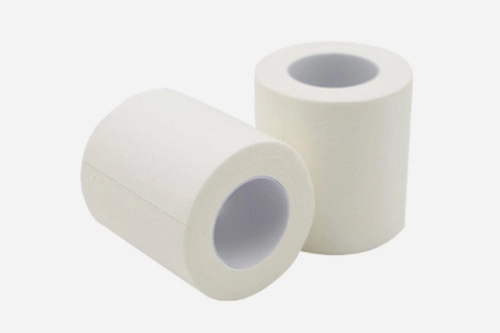
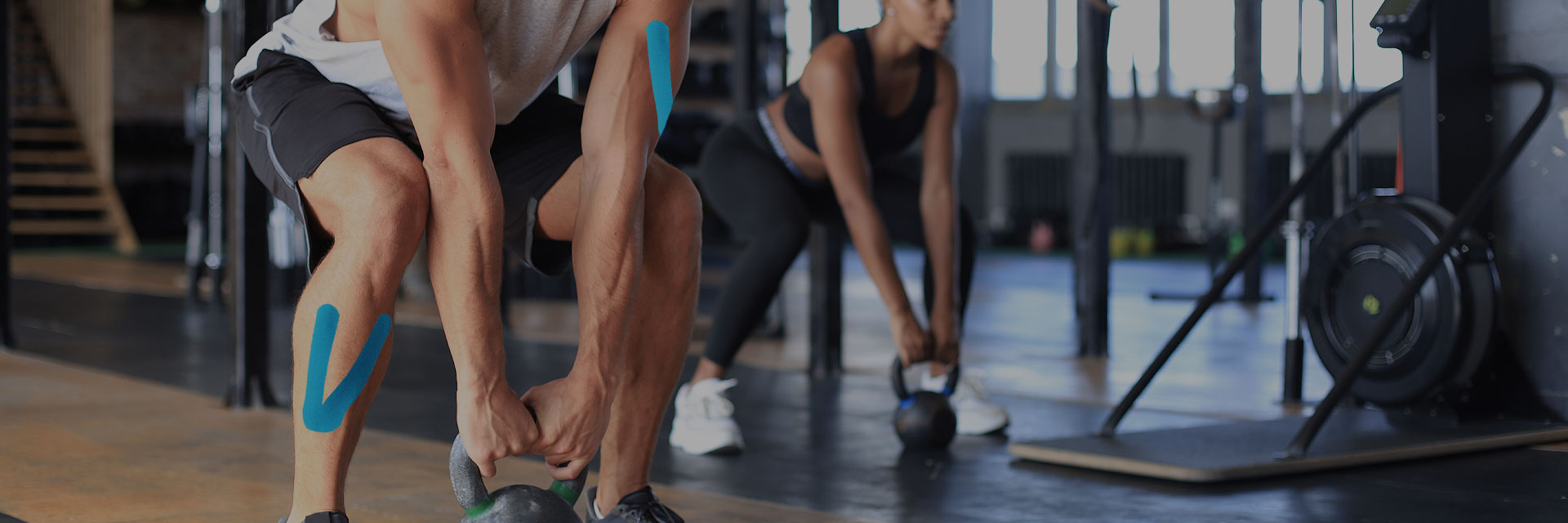
Zinc oxide sports tape (often called “zinc oxide tape” or historically “traditional athletic tape”) is one of the most widely used taping products in sports medicine and orthopedics. It is known for its rigidity, high adhesive strength, and durability—making it a cornerstone in joint stabilization, injury management, and biomechanical support.
What Is Zinc Oxide Sports Tape?
Composition and Structure
Zinc oxide tape is typically made of:
- Cotton backing — providing strength and somewhat limited stretch
- Adhesive layer — a formulation based on zinc oxide paste, natural rubber, and resins
- Thickness and tensile strength — higher than many elastic tapes
The adhesive content, especially zinc oxide, is responsible for strong adherence to skin and underlying stratum corneum—even under sweat and motion.
How It Works: Biomechanics & Physiology
Mechanical Support
Zinc oxide tape provides:
- Joint stabilization: limits undesirable motion (e.g., inversion at the ankle)
- Ligament protection: offloads stress on susceptible ligaments
- Skin resistance: high friction prevents slippage
By restricting motion through mechanical constraint, the tape helps protect injured or vulnerable structures.
Proprioceptive Feedback
Although relatively rigid, zinc oxide tape also:
- Stimulates cutaneous mechanoreceptors
- Enhances proprioceptive awareness (sensory feedback)
- May help neuromuscular control during movement
This isn’t as pronounced as with elastic kinesiology tape, but it still contributes.
Skin and Adhesion Properties
Zinc oxide interacts with the skin surface by:
- Creating a strong physical bond
- Maintaining adhesion even with perspiration
- Maintaining adhesion for longer periods compared to some tapes
However, the strong stickiness also means a greater risk of skin irritation or breakdown if misapplied.
Primary Uses and Clinical Indications
Zinc oxide tape is commonly used for:
Injury Prevention
- Ankle sprains (especially inversion injuries)
- Thumb and finger sprains
- Wrist stabilization in contact sports
Post-Injury Support
Used after acute or sub-acute injuries when:
- Joint stability is compromised
- Ligament laxity exists
- Return to activity requires mechanical support
Return-to-Sport Taping
For athletes cleared to perform but still needing external support.
Immobilization Aid in Absence of Bracing
In settings without rigid braces, zinc oxide tape provides a semi-rigid alternative.
Taping Techniques: Step-by-Step Technical Instructions
Below are common applications. These are high-level overviews; precise patterns vary by clinician and sport.
Ankle Stabilization (Standard Figure-8)
- Purpose: Limit inversion and eversion while allowing functional dorsiflexion/plantarflexion.
Steps:
- Skin prep: Clean, dry. Apply adhesive spray if needed.
- Anchor strips: Around lower calf and midfoot.
- Heel locks: Wrap under heel, over dorsum, around the ankle medially/laterally.
- Figure-8 passes: Cross over the ankle joint to reinforce.
- Locking strips: Final layers to secure ends without wrinkles.
Tips:
- Maintain neutral ankle position.
- Avoid excessive compression that impairs circulation.
Thumb Spica Taping
Purpose: Stabilize the ulnar collateral ligament (UCL) — common in “gamekeeper’s thumb.”
Steps:
- Anchor at wrist.
- Wrap around thumb base.
- Add reinforcing “U” pattern around first metacarpal.
Note: Ensure functional ability to oppose digits isn’t overly restricted.
Wrist Taping (Flexor/Extensor Protection)
Purpose: Resist hyperextension and collateral laxity.
Steps:
- Anchor around forearm and palm.
- Apply strips crossing the wrist joint.
- Finish with longitudinal connectors.
Best Practices for Application
Skin Preparation
- Remove oils, lotions, moisture.
- Clip excessive hair where necessary.
- Consider pre-tape spray or underwrap for sensitive skin.
Tension Guidelines
- Moderate tension for comfort and circulation.
- Too tight → vascular compromise.
- Too loose → ineffective support.
Overlap & Coverage
- Overlap strips by ~50% width.
- Smooth out wrinkles.
Removal Techniques
- Use tape scissors or adhesive remover.
- Peel slowly along the skin surface to minimize tearing.
Contraindications and Risks
Skin Issues
- Allergic sensitivity (especially to zinc oxide or latex/rubber)
- Dermatitis
- Broken skin, open wounds
Vascular and Neurological Concerns
- Cold, numb, tingling extremity after taping
- Blue or pale skin distally
Circulation Impairment
- Excessive tightness or swelling under tape
Improper Use
- Prolonged use without clinician oversight
Comparison With Other Tapes
| Feature |
Zinc Oxide Tape |
Elastic (Kinesiology) Tape |
Rigid Cloth Tape |
| Stretch |
Minimal |
High |
Low |
| Adhesion |
Very Strong |
Moderate |
Moderate |
| Support Type |
Mechanical |
Proprioceptive + Mild Support |
Mechanical |
| Water Resistance |
Moderate |
Varies |
Varies |
| Best Use |
Joint stabilization |
Neuromuscular facilitation |
General support |
Zinc oxide tape generally outperforms elastic tape in mechanical stability, but doesn’t provide the mobility or proprioceptive enhancement of kinesiology tape.
Evidence & Effectiveness
Current Research Overview
Clinical studies consistently show:
- Rigid tape (like zinc oxide) reduces excessive joint motion
- May lower risk of recurrent sprains
- Mixed evidence on long-term injury prevention without comprehensive training
Proprioception
Some studies find improved joint position sense when taped, possibly reducing reinjury risk.
Limitations of Evidence
- Variation in taping techniques
- Small sample sizes
- Differences in sport and injury types
Practical Considerations in Sports Settings
Duration of Wear
- Typically removed between sessions
- Some athletes wear for extended competitions
Sweat and Hydration
- Use underwrap or additional adhesive spray in humid conditions
Combination With Bracing
Taping can be used under or over braces for layered support.
Future and Innovations
Modern tapes incorporate:
- Improved adhesives with less skin irritation
- Hybrid tapes with engineered stretch zones
- Pre-cut shapes for efficient application
Zinc oxide tape remains foundational, but clinicians increasingly tailor use based on sport, athlete needs, and evidence-based best practices.